Building the Infrastructure for Crypto at the Checkout — with WalletConnect
Argentinians are no strangers to crypto.
After decades of sky-high inflation, it’s become a necessity. And while Americans complained about the price of eggs doubling in 2024, Argentinians have dealt with an average inflation rate of 204% since 2015. So with the Argentine Peso losing value like it’s going out of fashion, it’s no surprise that crypto is widely used in the country as a store of value.
In Argentina, crypto apps are popular not only as a means of buying Bitcoin, but also to acquire digital dollars (stablecoins). And those living outside the country use crypto apps to send money back home.
The Community Comes Together
At the end of November, the Ethereum community hosted its flagship event, DevConnect Week, in Buenos Aires. The gathering brought together crypto enthusiasts from around the world to experience Argentina’s crypto innovation firsthand.
While the Ethereum community was in town, another event — WalletCon— also took place in Buenos Aires. This event brought together WalletConnect partners, including developers, infrastructure builders, and wallet providers.
Founded in 2018, WalletConnect began as a protocol enabling crypto wallets to communicate with crypto apps.1 It links more than 700 wallets with over 80,000 applications for more than 52.5 million end users. The network is on track to support a payment volume of more than $400 billion in 2025. This surpasses Square’s 2024 volume of $241 billion, and Checkout.com’s anticipated $300 billion of processing volume this year.2

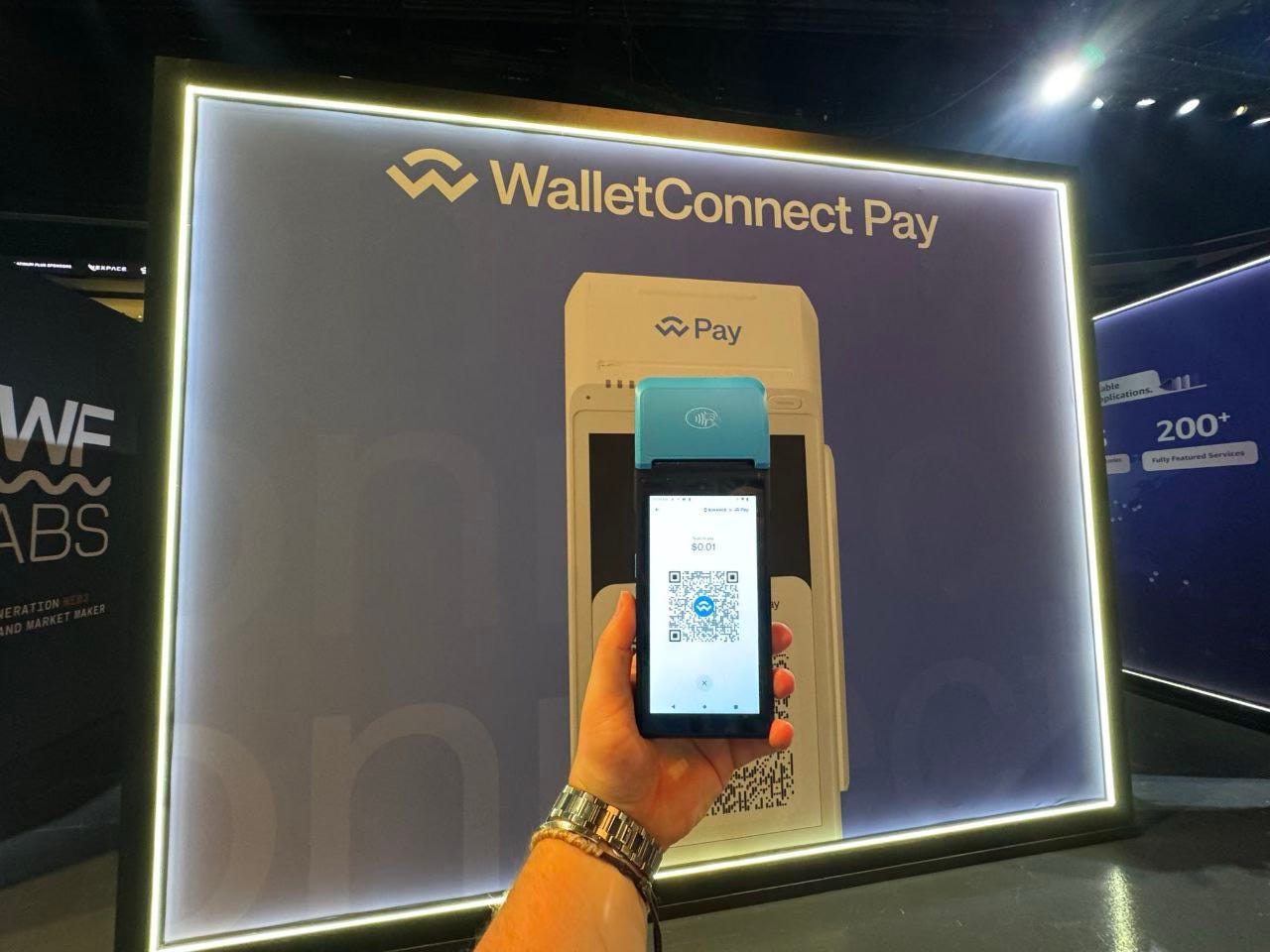
WalletConnect had recently launched WalletConnect Pay, and was showcasing the solution at WalletCon. In Buenos Aires, attendees could use it to buy WalletConnect merchandise on payment terminals throughout the event. It was a culmination of more than a year’s work.
Protocol to Payment Product
Not long after WalletCon, I spoke with Jess Houlgrave, CEO of WalletConnect, to learn more about WalletConnect Pay and how payment processors can add comprehensive crypto acceptance to their payments stack in days rather than months.
Jess told me that prior to WalletConnect Pay, “our technology wasn’t specifically designed for payments, and those companies [launching crypto payments] had to stitch together a whole bunch of other stuff at the back end in order to provide a clean end-to-end flow.”
Now with WalletConnect Pay, the company provides not only the wallet connectivity, but the settlement infrastructure and risk management tools. Payment providers can accept payments from all wallets connected to the WalletConnect ecosystem and receive settlement in a variety of crypto assets, including stablecoins, or even fiat currency, if they so wish.
Jess started building in the crypto space in the late 2010s, and more recently gained experience building in a traditional fintech environment, working as Chief of Staff, and then Head of Crypto Strategy at fintech unicorn Checkout.com. Now, as CEO of WalletConnect, Jess noted “I sit between the two [traditional payments and crypto] and we get to build the standards with the industry, and help bring everyone closer together.”
Enabling PSPs to Accept Crypto
WalletConnect’s goal isn’t to sell directly to merchants, but to partner with PSPs, enabling them to integrate crypto payment acceptance alongside cards, and mobile wallets such as Apple Pay.
This reminds me how payment gateways evolved ten years ago. Back then, card payments and PayPal were table stakes, but integrations into local payment methods could be done in one of two ways.
Either payment gateways could build their own integrations into local payment methods, or they could work with an orchestration platform such as PPRO to gain access to a wide range of local payment options through a single integration. As an equivalent, WalletConnect Pay acts as that aggregation platform for crypto wallets.
For PSPs, this unlocks a valuable customer segment. There’s substantial wealth held in crypto, and customers are looking to spend it. This is particularly attractive to those purchasing luxury products such as Ferraris and Malibu seaside homes. If you need to settle a $25,000 tab at a Buenos Aires nightclub, crypto can come in handy — for transaction values this eye-watering, credit cards can struggle to work their magic.
Managing Risk For PSPs
Usually, the upper limit of any single payment transaction is restricted. Card issuers set a limit based on the available credit line, and card acquirers may have a maximum transaction value hard-coded into their systems. Even with open banking, each bank sets its ceiling based on its risk tolerance, and any payment over this threshold requires prior authorisation.
Crypto payments solve for some of the constraints of card payments, but they present a different challenge — there is no upper transaction limit.
Crypto wealth can be easily spent, but PSPs still need to be cautious of money laundering and other compliance risks. Jess explained that WalletConnect Pay offers PSPs control, “WalletConnect offers a modular solution. The PSP can impose their own limits. The goal here is not to get around laws and regulations that payment companies need to follow. Each PSP manages their own compliance—we give them infrastructure flexible enough to meet whatever requirements they face.”
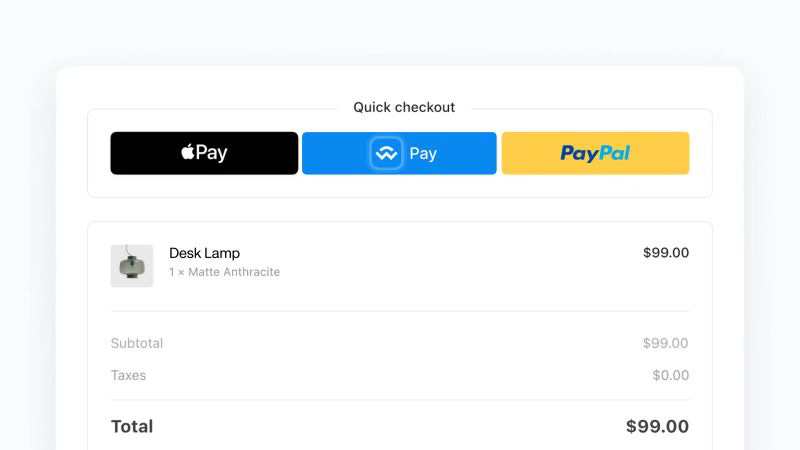
As demonstrated at WalletCon, WalletConnect Pay can operate both on a point of sale device, as well as in an ecommerce environment. In-person payments currently rely on QR codes, which are a common user experience in Southeast Asia, India and Brazil, but less so in the US, UK and Europe. In these markets, the simplicity of contactless payments and especially Apple Pay and Google Pay are more common.
Closing the UX Gap
Jess acknowledged that the user experience for crypto payments can be improved. “A crypto payment, even though it works today, is still a worse experience, typically, than tapping my Apple pay. I take my phone out. Done. There’s more intensive action today required for a crypto payment.” In 2026, this will be something to watch — can crypto payments become as easy to use and familiar as card payments?
WalletConnect has an ambitious road map. A recent White Paper outlines plans to optimise the checkout experience and integrate with other QR-based systems. The goal is for a world in which “PSPs can operate a dual-rail future where card and crypto acceptance coexist seamlessly” and merchants “gain lower fees, direct crypto settlement, and fraud protection without sacrificing existing operational standards.”
Heading into 2026, WalletConnect Pay offers PSPs a practical option — one integration connecting millions of end users, with settlement in crypto or fiat.
Thanks for reading Payments Culture!
Special thanks to Jess Houlgrave at WalletConnect for the discussion.
If you are a fintech company and want to share your story please reach out and let’s talk further. You can contact me via email, on LinkedIn, or on X.
Note that views expressed on this Substack are my own and do not represent any other organisation. Also nothing I say should be taken as investment advice.
Why Subscribe to Payments Culture?

Every week (or so), get one long-form email with my curated insights.
Some weeks, I’ll add additional content including personal essays, case studies, and interviews with fintech leaders.
Paid subscribers get at least 1x additional essay(s) per month, access to the full archive, and more features currently under development.
If you’d like to support this newsletter you can get a monthly membership for less than the cost of a beer (in London). An annual membership is more than 95% cheaper than attending a big fintech conference — and you may learn more by reading this!
Note: You can refer friends or colleagues to earn complimentary month(s) of paid membership.
Without WalletConnect, developers need to integrate each wallet into their app individually, or use an alternative such as Sign-In With Ethereum (SIWE), which is only for the Ethereum and EVM chains. The other option would be to utilise an embedded wallet provider, such as Privy, DFNS, or Crossmint.